


Moving to ERP is not just a software change; it changes the way your entire factory works. Factories that succeed in this transition plan for it in advance, while those that fail jump in without preparation. In Saudi Arabia, the industrial sector is developing noticeably under the Vision 2030 targets. This change requires factories to adopt integrated systems that connect production, inventory and accounting.
Factories face major challenges when they rely on traditional accounting and scattered files. Moving to ERP for Saudi factories changes the way operations are managed, improving data accuracy and reducing errors. A mid-sized factory needs 4 to 8 months to reach full operation, depending on project complexity and resource readiness.
In this article, we explain how to prepare a practical plan that starts with assessment and data auditing, followed by choosing the right system, training and migration. This transformation requires commitment and careful planning to succeed.
Key Points
- Moving to ERP requires advance planning.
- ERP systems connect all aspects of the business.
- Factories need accurate data to support growth.
- Implementing the system may take 4 to 8 months.
- The plan should start with assessment and data review.
Introduction: Moving to ERP and Changing How Factories Work
Changing how factories work requires more than adopting a new technology. Digital transformation is an opportunity to improve efficiency and reduce waste. An ERP system unifies production, inventory and accounting data on one platform, giving management a real-time view of operations.
This change supports Saudi Arabia’s Vision 2030 goals of strengthening competitiveness. The system must comply with the requirements of the Zakat, Tax and Customs Authority, especially regarding value-added tax and e-invoicing.
To learn more about the Saudi industrial environment, you can visit the Ministry of Industry and Mineral Resources. You can also consult the digital transformation guide to understand how to achieve this transformation in an organized way.
Why Do Some Factories Succeed While Others Fail?
A factory’s success in moving to integrated systems depends on a set of decisive factors. Every factory needs to understand these factors to ensure a successful transformation and achieve the expected benefits.
Success Factors
- An executive sponsor: The project needs clear support from senior management to link production goals with costs.
- Data cleansing: Data accuracy is essential, as errors in items and raw materials affect decisions.
- Employee training: Involving the inventory, accounting and production teams from the start reduces resistance to change.
- A realistic scope: Start with measurable core processes rather than trying to run all modules at once.
- A follow-up plan: A plan for tracking quality and cost indicators helps achieve success.
Failure Factors
- No executive owner: A lack of clear leadership can scatter efforts.
- Unorganized data: Inaccurate data leads to wrong decisions.
- Weak training: Insufficient employee training can hinder implementation.
- Excessive customization: Unnecessary changes to the system can complicate matters.
- Ignoring the user experience: Failing to consider users’ needs can lead to dissatisfaction.
“Good planning is the foundation of success.”
| Factors | Success | Failure |
|---|---|---|
| Executive sponsor | Present | Missing |
| Data cleansing | Done | Unorganized |
| Employee training | Sufficient | Weak |
| Realistic scope | Measurable | Complicated |
| Follow-up plan | Present | Absent |
Preparing for the Transition: Before You Start
Good preparation is the first step toward a successful move to integrated systems. Factories should take enough time to assess every aspect of the business before starting this transformation.
The key preparation points are:
- Define the goals: Goals should include fewer inventory errors, faster closing of the books and better adherence to production schedules.
- Form the project team: Build a team that includes finance, production and purchasing so all of the factory’s needs are represented.
- Document current processes: It is important to document all processes from purchase request to delivery, which helps reveal duplication and delays.
- Inventory data and systems: Identify what needs to be cleaned or archived before implementing the new system.
- Set the budget and timeline: Set a clear budget and define responsibilities and migration risks.
- Check regulatory requirements: Make sure you comply with Saudi requirements such as e-invoicing and value-added tax.
| Point | Description |
|---|---|
| Define the goals | Reduce errors and improve schedule adherence. |
| Form the project team | Ensure all departments are represented in the process. |
| Document processes | Reveal duplication and delays. |
| Inventory the data | Clean data before implementation. |
| Set the budget | A clear plan for responsibilities and risks. |
| Check requirements | Compliance with regulatory requirements. |
Phase One: Data Audit
The data audit phase is a vital step in moving to integrated systems. This phase takes 2 to 4 weeks, during which items, raw materials, inventory balances and accounts are reviewed. This work requires high precision to ensure the project succeeds.
During this period, the relevant teams should identify duplicate records and non-standardized codes. Physical inventory balances should also be reconciled with accounting records, because any differences can affect costs and the final product.
It is also essential to review bills of materials. Any error in a product’s composition can lead to incorrect raw material calculations. Data owners from the various departments should sign off on the data before it is moved to the new system.
This process makes it easier to backflush production components automatically when production orders are issued, reducing manual entry and errors.

Phase Two: Choosing the Right System
When moving to integrated systems, choosing the system should be a carefully considered step. Evaluating three vendors is the best way to make sure the system fits the factory’s needs. The evaluation should cover several aspects, such as how well the system fits manufacturing processes, integration with accounting and inventory, and scalability.
Ask each vendor to present a practical scenario that starts with a sales order and ends with a production order, delivery and an e-invoice. Check the quality of local support and response speed, because any system outage can hurt daily work.
Phase Three: Train the Team First
After choosing the system, team training comes next. Set aside a full month to train employees on their actual roles. This includes separate training for accounting, production, inventory and management. A practical test before go-live is also recommended to measure employees’ ability to create an item, a purchase order, a production order and an inventory adjustment.
Training is not just about memorizing steps; it should include understanding the impact of each transaction on inventory, costs and accounts.
“Good training is the key to success in digital transformation.”
Phase Four: Gradual Migration
Gradual migration is a vital step in improving the management of factory operations. It is important to start with finance and inventory management, as these areas provide a clear basis for reconciling balances and costs before expanding the scope of implementation.
Phase Five: Parallel Running
Data is moved in batches, with each batch approved and compared with previous records before moving to production. The parallel running period lasts one to two months, allowing the new and old systems to run together and daily results to be compared.
During this period, differences in invoices, purchase orders, inventory movements and production orders should be recorded. This phased operation reduces the risk of the factory stopping, especially when the full project in a mid-sized factory extends to 4-8 months.
The decision to phase out the old system should be tied to test results, not to a fixed date or a personal impression.
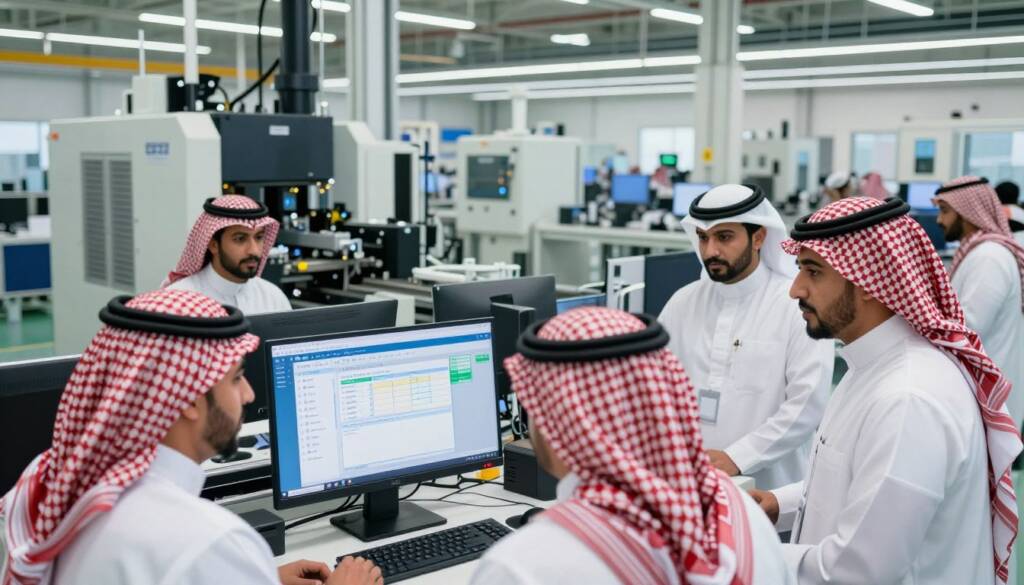
Phase Six: Measurement and Improvement
After implementing integrated systems, measurement and improvement come next. This is when factories need to assess their performance regularly. It is important to track key indicators such as inventory accuracy and the time to close the books.
Measurement should focus on reducing waste and improving adherence to production schedules. For example, cutting raw material waste by 10% and reducing excess labor by 15% can improve return on investment.
New challenges may also emerge. It is therefore important to connect the system to machine sensors in the near future, which will allow production and downtime to be recorded automatically.
Post-Implementation Measurement and Improvement Indicators
- Inventory accuracy
- Time to close the books
- Waste rate
- Production adherence
- Order processing time
Common Mistakes to Avoid
To succeed in implementing systems, avoid the following mistakes:
- Ignoring data quality
- Expanding too early
- Weak training
- No testing
- Neglecting security
- Not reviewing indicators
It is advisable to review performance weekly at first, then monthly. User feedback should also be turned into specific process improvements.
Don’t forget the importance of complying with e-invoicing and value-added tax. For more information, visit zatca.gov.sa.
Benefits of ERP for Factories in Improving Operational Efficiency
Business management systems such as Riv-ERP are an integrated solution for improving operational efficiency in factories. These systems strengthen inventory management and backflush components automatically when production orders are issued. They also provide e-invoices linked to delivery notes, making financial follow-up easier.
Riv-ERP support covers the following:
- Data unification: Bringing customer, sales, purchasing and inventory data together on one platform.
- Inventory management: Backflushing production components automatically when manufacturing orders are issued, to reduce surpluses and shortages.
- Invoicing: Better financial follow-up through e-invoices.
- Financial reports: Comprehensive reports on accounts, balances and income statements.
- Cloud access: Enabling teams to work from different locations with the appropriate permissions.
- Operational reports: Tracking production, reservations and remaining materials to improve decisions.
For details of the solution, visit riv-erp.com. Request a demo to discuss your factory’s needs, without treating the demo as a guarantee of successful implementation or fit before assessment.
Conclusion
Moving to integrated systems requires a comprehensive vision that goes beyond buying software. This transformation begins with a deep understanding of processes and available data, not just reliance on technology.
The practical path includes preparation and data auditing, then choosing the right vendor and training, and finally migration and parallel running. The system helps connect production, inventory and accounting, but success depends on the quality of implementation and how the team uses it.
Implementation in a mid-sized factory takes 4 to 8 months, requiring time and a clear budget. Goals for reducing waste and improving data accuracy should be measurable, not just promises.
We invite factory owners to compare solutions according to their needs, request a demo, and draw up a gradual, reviewable transition plan.
How Does Riv-ERP Support the Transition Journey?
✅ Data audit: A local team helps organize and prepare the data
✅ Training: A complete training program in Arabic for all user levels
✅ Migration: A gradual plan designed to avoid operational downtime
✅ Parallel running: 24/7 technical support during the most critical phase of implementation
✅ Measurement: Ready-made KPI dashboards to measure implementation success from day one
✅ Compliance with ZATCA: Full compliance with e-invoicing requirements.
All of this is available at riv-erp.com
FAQ
What is an ERP system and how can it benefit Saudi factories?
What challenges might factories face when moving to an ERP system?
How can factories measure the success of an ERP implementation?
How long does it take to implement an ERP system in factories?
Do employees need training before using an ERP system?
See Riv-ERP in action
Two editions: RivDesktop on your own server, or Riv-ERP Cloud on Oracle Cloud.
Book a demo

